

This article is from The Vault – dated August 23, 1971. BY Robert Boyle.
It’s the exact replica of Robert’s article. It’s so beautifully written – I wish to always go back to reading it so I copied it on my blog ( lest they remove the link). I have added my touch with the pictures 🙂
………
Not long ago Herman Herst Jr., who may be the world’s leading enthusiast of the hobby of stamp collecting, discovered that Dr. Irving Keiser, an entomologist who specializes in stamps with insects on them, had the 1939 U.S. baseball issue in his collection.
“What does this stamp have to do with insects?” asked Herst.
“Look at it,” said Dr. Keiser.
Herst peered at the stamp through a magnifying glass and said, “All I see is a guy ready to catch a fly.”
 https://en.m.wikipedia.org/wiki/Herman_Herst_Jr.
 The original layout of the article
“You’ve got it!” exclaimed the doctor.
At this point a less understanding and dedicated man might have turned to collecting entomologists, but Herst, the author of Stories to Collect Stamps By and other works, was enthralled. Plunging ahead in search of further funnies, he found in the doctor’s collection a copy of the 1945 Turkish stamp showing the battleship Missouri. When Herst asked (hopefully) what relation that stamp had to insects, the doctor replied, “She’s in the mothball fleet.”
It takes no more than this to put Herst in heaven. Seven days a week, every day of the year, Herst looks at stamps, writes about stamps, talks about stamps and even dreams about stamps. “In color,” he says. To Herst, no hobby, sport or pastime can compare with philately. There is, he says, the thrill of the chase after an elusive stamp, to say nothing of the absolute joy of unexpected discovery. Just looking at stamps can give Herst a sense of pure esthetic bliss. Furthermore, there are the friendships to be found in philately, “friendships that transcend race, religion and nationality,” says Herst, a gregarious sort who has been to Europe 40 times in search of stamps.
Then there is the knowledge to be acquired from stamps. Heist’s mind is stuffed full of information, 99% of it gleaned from studying stamps. He can talk at length about the membership of the Confederate cabinet (the Confederate post office made such a profit that after the Civil War the North tried to get the postmaster general to take the job in Washington), dwell on the history of whaling or the settlement of South Africa. Mention sports, and Herst is off on a gallop about Ira Seebacher’s collection of sports on stamps, pausing to throw out the fact that the former British Colony of St. Kitts-Nevis in the West Indies once issued a set of stamps to raise money for a cricket field or that the Bahama Islands not only issued stamps with game fish on them but used a postmark of a hooked sailfish. He will tell how Fred Mandell sold the Detroit Lions so he could go into the stamp business in Honolulu or recount how a bunch of kids once made hockey pucks out of bundled sheets of the very rare Providence postmaster’s provisional of 1846.
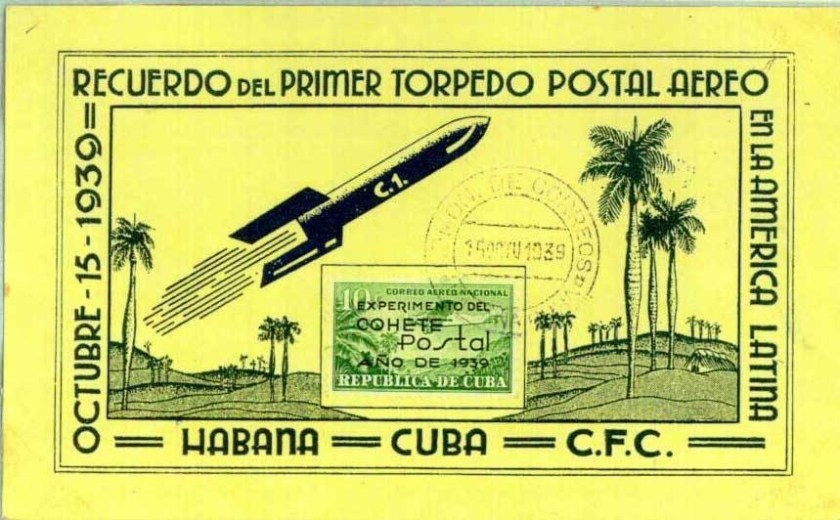
Continuing in the sporting vein, Herst is fond of relating a racetrack incident that took place in Havana in 1940 when the American Air Mail Society held its convention there. The collectors just wanted to stand around the hotel lobby talking about stamps, and they were dismayed to learn that their Cuban hosts had scheduled an afternoon at the track. When a couple of collectors suggested no one would be interested in going to the races, the Cubans said, “They’ll be interested in this.” Out of politeness the collectors went to the track and picked up a list of the entries. To their astonishment, there was a horse named Stanley Gibbons running in the first race and Stanley Gibbons was the name of a well-known British stamp dealer. The horse was an improbable long shot, but the collectors bet him on the hunch. Stanley Gibbons won. The collectors looked at the second race entries. There was another long shot named Perforation. They bet; Perforation won. So it went through the rest of the card. In every race there was a long shot with a philatelic name that paid off handsomely.
“No one in the stands except the philatelists realized what was happening,” Herst says. “The American Air Mail Society convention was one of the few stamp meetings from which attendants were privileged to go home with more money than they had come with.” The Cuban government, which apparently had arranged the whole deal to make the Americans happy, was so pleased that it surcharged a stamp commemorating the convention.

Now 62 years old, Herst has been a stamp dealer and auctioneer since 1936. His slogan is, “If it’s U.S.A., see Herst first.” His home and office are in Shrub Oak, N.Y., and outside the driveway is an enormous painting of a postage stamp. The stamp is Barbados, Scott’s Catalog No. 109, the so-called “olive blossom” because it was issued in three colors. The stamp intrigued Herst as a boy, and he has adopted it as his trademark, painting out Barbados and substituting Herst.

Herst ordinarily arises at 8 and puts in a full day exuberantly examining stamps, cataloging lots for sale at auction (he has sold more than $10 million in stamps at auction since 1936) and trotting to a bank vault in Peekskill to examine his philatelic treasures. The workday ends at midnight, but around 4 in the afternoon Herst takes a break. He pours himself a small nip and relaxes by talking about stamps or writing letters about stamps to friends and acquaintances at home or abroad. Every day Herst dispatches 50 to 100 letters to philatelic pen pals, and it does not bother him that many of his correspondents haven’t bought a stamp from him in years. “I just love it,” Herst says. Indeed, one need not write a letter to Herst to get a letter. A recent visitor was astounded to get four letters in one week. “Thought you’d be interested,” Herst explained.

Herst has such a compulsion to write that when he goes off on a trip with his wife Ida, he pecks away at a typewriter on his lap in the front seat of the car while she drives. Besides Stories to Collect Stamps By, he has written a couple of other books, Nassau Street and Fun and Profit in Stamp Collecting, and co-authored the scholarly Nineteenth Century U.S. Fancy Cancellations and The A.M.G. Stamps of Germany. Several times a year he writes and publishes his own periodical, Herst’s Outbursts, copies of which are sent gratis to anyone sending in six stamped self-addressed envelopes. So far, more than 6,000 people have written in to subscribe, and recent issues include a photograph of Herst kissing the Blarney Stone on a trip to Ireland and a long piece on the infamous Jean Sperati of Paris, “one of the most dangerous stamp counterfeiters ever to wield stamp tongs.” Sperati, Herst told his readers, was a genius who even made his own paper, duplicating that of original stamps. Fortunately, Sperati’s American counterfeits were few, limited mostly to Confederate stamps, and, although the counterfeits were superbly done, Sperati tripped himself up by using the faked postmark of Middlebury, Vt.

Above and beyond writing his own magazine and books, Herst serves as an untiring correspondent for any number of philatelic publications. Last February he and Ida took a two-week vacation in the Bahamas and, as Herst reported to readers of the 1971 spring issue of Herst’s Outbursts, “Aside from the fishing, swimming and just relaxing, we spent the time producing this issue of Outbursts; 14 of our weekly columns for Mekeel’s Weekly Stamp News; 16 of our monthly columns on ‘Stamps’ for Hobbies; feature articles for Western Stamp Collector; a series of articles for First Days; two articles for Philatelic Magazine of London and one for Stamp News of Australia, for each of which we are American correspondent.”
Philatelically, Herst has received honor after honor. He is one of only five persons to receive the gold medal of the New Haven Philatelic Society, and in 1961 he won the John A. Luff Award of the American Philatelic Society, the most coveted in the country, for his exceptional contributions to stamp collecting. Herst himself is not only a member of the APS but one of its five accredited experts qualified to pass on U.S. stamps submitted for authenticity. He was the stamp consultant for the radio program The Answer Man. He is a member of the American Stamp Dealers Association, the Oklahoma Philatelic Society, the Royal Philatelic Society of Canada, the British Philatelic Association, the Texas Philatelic Association and five dozen other stamp organizations. He is a founder-member of the Cardinal Spell-man Philatelic Museum, and he was once pleased to hear the late prelate remark that it was easy to be a cardinal but difficult to be a philatelist.
Stamps aside, Herst is a rabid joiner and do-gooder. “I’m everything!” he exults. “I’m a Kiwanian, a 32nd degree Mason, a Shriner! I’m in the Baker Street Irregulars where I’ve been invested as Colonel Emsworth, V.C.” Herst is also a member of the American Civil Liberties Union, the Manuscript Society, the American Feline Society (he feeds stray cats), the Bancroft Library of the University of California and various other organizations, including the Boy Scouts, for whom he is a merit badge examiner in stamp collecting. “I just can’t say no,” Herst says of his multitudinous memberships.

When it comes to memberships or honors, he is rivaled only by his dog Alfie, a gigantic German shepherd. Alfie is mascot of the destroyer Alfred, an honorary citizen of West Germany, an honorary postman of the Italian post office and recipient of a commendation promulgated by the German Shepherd Squad of Scotland Yard. Alfie’s honors have come about through the efforts of his energetic master. Back in the 1950s Herst discovered that federal law permits private carriers to issue “local” stamps in delivering mail to and from post offices that do not offer home delivery or pickup. Herst issued his own Shrub Oak local stamp, and in 1967 he put Alfie on a second issue. The stamp shows Alfie carrying a letter in his mouth.
Herst’s discovery of the local loophole in federal law has prompted several persons elsewhere to print their own stamps. A narrow-gauge railroad buff on Long Island issued a triangular stamp for local mail on his midget line, but the Federal Government confiscated his stamps and suppressed the mini-service because he had put the prohibited words “United States” on the stamp. Similarly, federal authorities seized the local stamps used for delivery to Rattlesnake Island in Lake Erie because they were “in similitude” to government issue. In Walpole, Mass. the members of the “906 Stamp Club,” all inmates of the Massachusetts Correctional Institution, operate a local post carrying letters from cells to the prison post office. Requests to have the route extended have been denied, says Herst, who is a patron of the prisoners and goes there once a year to speak and judge the inmate stamp show.

In the course of a year Herst gives 30 to 40 speeches before all sorts of groups. “I am the most in-demand speaker in philately,” Herst says. “That’s because I don’t charge.”
Before a staid audience of stamp collectors, Herst is fond of posing as a collector of tea tags. With a straight face, he solemnly talks about the pleasures of collecting tea tags, especially from unusual varieties of tea bags. Using philatelic jargon, Herst will hold up a tea bag and say, “This is the double string variety. Note the misprint, ‘TOOO-LONG.’ ” If the audience is receptive he will go on about tea bags all night. Several years ago Herst was paying a hotel bill in Portland, Ore. when a woman in front of him dropped her purse and the contents spilled all over the floor. “I’m terribly embarrassed,” she said to Herst. “You must think I’m crazy, but I collect tea bags.” Herst shouted, “So do I!”
A self-confessed screwball, Herst comes by his quirks naturally. His father was a somber lawyer who died when Herst was 4, but his mother was an individualist. A concert violinist, she played in an all-girl band that John Philip Sousa once organized and served as Lillian Russell’s accompanist. During World War II she was founder, president and sole member of IRCED, otherwise known as the Issue Ration Cards for Dogs society, and as such was the author of innumerable letters to the editor of The New York Times. Whenever Mrs. Herst was accosted by a panhandler, she would not give him a dime but would invite him home for chicken noodle soup.
Herst, who has been known from childhood as Pat because he was born on March 17, began collecting stamps when he was 8 and early on developed affinities for certain stamps and countries. He started collecting the Barbados “olive blossom”; the very name Straits Settlements smacked of romance to him; and he developed a deep love for Nepal. “Nepal is one of my countries,” he will confide to a fellow collector.
When not engrossed in stamps, Herst was an unruly youngster. Once a cop collared him for stealing apples from a grocery store and Mrs. Herst exclaimed, “Really! And I can’t even get him to eat fruit.” At the age of 12 Herst was shipped off to Portland, Ore. to live with an aunt. He attended high school in Portland and then went to Reed College, where he was graduated in 1931. He got a job as a reporter on the Morning Oregonian but, as he wrote in Nassau Street, his autobiography, “the increasing shadows of Depression fell across the lumber capital of the nation, and unfortunately I found my services dispensed with. I was given a letter to The New York Times calling attention to my abilities.” Bumming east on freights, Herst duly presented himself to the editors of the Times. He worked there briefly selling classified advertising and then moved to the Newark Star Ledger. But two days in Newark introduced Herst to two facts of life he had not previously encountered: first, commuting from New York to Newark was “a somewhat reverse form of existence,” and second, “people in Newark in 1932 did not believe in classified advertising.
Taking another job, Herst labored for two weeks like a busy elf, cutting imitation leather into fancy letters for theater marquees. Unfortunately, his rate of production slowed noticeably after using a razor-sharp knife to cut the letters “G” and “S,” and he left joyfully with bandaged fingers for a position in a Wall Street firm, Lebenthal and Company, dealers in municipal bonds.
Paid only $12 a week, Herst was not long in supplementing his income (and that of his fellow workers at Lebenthal’s) by forming a syndicate to buy up stamps and sell them at a profit to dealers on nearby Nassau Street. Talk around the office dealt less with bonds and more with stamps, and the head of the firm decreed that there was to be no more mention of stamps. Herst, falling back on what sociologists call collective representation, said, “Let’s call them worms,” and the Worm Syndicate at Lebenthal’s continued to do business. Given an hour for lunch, Herst spent four minutes wolfing down orange juice, coffee and a doughnut and the remaining 56 minutes discussing the finer points of philately with dealers and collectors. At Lebenthal’s Herst worked furiously because he believed in giving value for money received (“When Pat works,” says Ida, “things fly in all directions”), and he was promoted to cashier. Despite an assured future on the Street, Herst quit in 1935 to become a stamp dealer.
From the start, he loved being in stamps full time, and the saddest part of each day came when he had to lock the door to his office at 116 Nassau Street, an ancient, narrow thoroughfare as rich in characters as a Moroccan souk. To begin with, there were the “satcheleers,” little men, mostly East European Jews, who, with no overhead and no capital except their wits, made the rounds of dealers and collectors, toting stamps in voluminous satchels on speculation and consignment. Adhering to their cultural milieu, they spoke a rich patois that has surcharged stamp collecting with soul-felt Yiddish expressions. For Herst, deskbound, serving collectors during the day, the satcheleers were as necessary as bees to a flower, since they pollinated philatelically all over town.
Satcheleers still exist in stamps, and although Herst now lives 45 miles out of New York City he lets them know in advance when he is about to visit the metropolis so they may open their satchels and spread their wares before his eyes. For several years, Herst has been making notes on the satcheleer subculture, and he is particularly taken by the exploits of one known as Morris (“I wouldn’t kill a fly”) Coca-Cola, a diminutive Russian who wore oversized secondhand coats that cascaded off his birdlike shoulders and gathered in rich drapery around his ankles.
In Herst’s first heady days on Nassau Street satcheleers were not the only characters. At 90 Nassau Street lurked the Burger brothers, Gus and Arthur, elderly Germans who moved into the building in 1886 and hadn’t dusted a thing since. Their premises were awash with all sorts of papers and stamps, many of them rarities, including discoveries made by the brothers themselves when they bicycled through the South in the 1890s looking up Confederate veterans with “old letters.” The building that housed the Burgers was equally ancient. Five stories high, it had no elevator, and the rest rooms were marked “For Males” and “For Females.”
Despite the Victorian clutter around them, the Burgers knew the exact location of every stamp, and when they had finally fetched forth, amid clouds of dust and cobwebs, a superb sheet-corner margin copy of, say, the U.S. 3$ 1851 (Scott No. 11), their price was outrageous. Arthur would say to Gus, “What should we ask for this?” Gus would answer, “Twenty dollars.” Arthur would then tell the collector, in earshot all the while, “Just what I was thinking. Forty dollars.”
In Heist’s time, outfoxing the brothers, dubbed the Burglars, became a sport for experts. Anyone who outwitted them was elected to the Fox Club, which made its headquarters in the office of Percy Doane, an auctioneer. “The rules were simple,” Herst says. “One had to visit the offices of the Burger brothers, buy a stamp from them at retail and then put it in one of Doane’s auctions. If the buyer netted a profit on the deal after paying Doane the commission, he was in. But simple as the rules were, the attainment of membership was fraught with certain difficulties. In the first place, the stamp would have to be bought sufficiently below its value to permit a profit when sold at auction. Since the Burgers were usually anticipatory in their prices, asking a figure at which an item might be expected to sell 10 years hence, this made a profitable sale more than unlikely. The only way would be by finding the Burgers uninformed on the true value of something—and these Joves hardly ever nodded.”
One character Herst knew well, Y. Souren, was out of a Peter Lorre-Sydney Greenstreet movie. Souren, whose real name was Souren Yohannasiants, was a Georgian who had fled Russia during the revolution with a $100,000 collection of clocks hidden under the hay in a donkey cart. In the late 1930s Souren occupied a fancy office on Park Avenue, and visitors were admitted only after scrutiny, as though suspected members of a spy ring. He kept a private dossier on stamp dealers, collectors and those stamps that had passed through his hands. He had X-ray machines, ultraviolet apparatus and cameras at hand, and he was fond of bringing forth, with appreciative Near Eastern chuckles, photographs of what Herst describes as “unquestionably the same item, perhaps with a straight edge [of a stamp] reperforated [to make it more valuable], a fancy cancel added or other stamps added to the cover.” Souren also had photographs of ads by stamp dealers offering items that were misleading. “Comes in handy whenever I want something from someone who doesn’t want to cooperate,” Souren told Herst.
Years ahead of the FBI, Souren had a camera hidden in the ceiling of his front door, “He was always afraid of being robbed,” Herst recalls in Nassau Street, “and with good reason, for in his heyday it is doubtful whether any premises short of the Bureau of Printing and Engraving and the stamp vaults in Washington held a more valuable accumulation of stamps. He showed me photographs of every person who had passed through that door in recent days. I saw my photograph several times.”
With Herst, Souren unveiled his treasures, including his gem of gems, a block of the U.S. 24¢ 1869 inverted center, which went with him everywhere. Souren had the block mounted between glass panels in a small holder that he secreted in a special coat pocket. “Several times over a sandwich or a meal he would take it out and admire it,” Herst says.
Always a keen student of stamps as well as a collector, Herst was not long in putting his knowledge to profit. While examining some minor purchases one day, he happened to notice that a copy of the U.S. 30¢ 1869 looked a bit odd. The flags were on top of the stamp instead of the bottom. It was a rare error, Scott No. 121b, which then cataloged at $4,500. Herst had paid $3 for it, and he sold it for $3,300. He bought a car and steamship tickets for himself and his mother for a trip to Europe, where he made several coups. In London, Herst learned the Coronation issue of Southern Rhodesia had suddenly become scarce because it was withdrawn from sale. The set had a face value of about 30¢, but a British dealer offered Herst $4.03 for a set. Herst called New York, where the set was selling for only 40¢, and asked a dealer to ship as many sets as possible. Herst wound up selling some for $5 each. In Paris, Herst made a find at one of the bookstalls along the Seine, an old album containing at least 500 copies of the U.S. 50¢ Omaha, Scott No. 291. He bought the collection for $20 and within six weeks had disposed of all the stamps for almost $1,000.
Back home on Nassau Street, Herst also prospered. On Pearl Harbor Day he reacted with philatelic foresight. The minute he heard news of the attack, he addressed five envelopes to fictitious addresses in Tokyo. When Germany declared war on the U.S., Herst sent five envelopes to fictitious addresses in Berlin. Eighteen months later all the envelopes came back to Herst with a series of unusual postmarks and censor stamps, and they have been in his World War II collection ever since.
Over age for service, Herst talked about stamps to wounded veterans at hospitals. He believes stamps are excellent therapy. He also asked any servicemen he knew to remember him wherever they went. Most did, and Herst now has the first letter mailed by the Marines from Guadalcanal, a collection of stamps used for espionage purposes, copies of Hitler’s personal mail and the only propaganda leaflets dropped on the Japanese on Kiska and Attu.
“I don’t collect the conventional things,” says Heist. “Philately has no limits. There’s nothing in life that philately doesn’t cross.” To prove his point, Herst once made a bet with a collector that he, Herst, could start a specialist collection that would win a prize at a major stamp show, and that he would assemble the collection at a total cost of less than $5. Herst won the bet with a collection of wanted notices sent out on postcards by sheriffs in the 1870s and 1880s. “In those days, mail service was faster than criminals,” says Herst, who has scant regard for the present U.S. postal system.
In 1946 Herst moved from Nassau Street to Shrub Oak. “I had to get away,” he says. “I couldn’t get any work done. My office had become a lounge. There were all sorts of people there. One guy and his wife wanted to spend their honeymoon there.”
In Shrub Oak the bane of Herst’s existence is getting common stamps from people who send in a “rarity.” Herst will run to his stock, pick out a copy and send both back with the reply, “Now you have two of them!” He is often called in by estates to appraise collections, and from time to time genuine rarities do come his way. A 10-year-old boy in New Brunswick, N.J. discovered a copy of the 5¢ Kenya stamp showing Owen Falls Dam with Queen Elizabeth upside down. Herst acted as agent for the youngster and sold the stamp, the only copy known, to the Maharajah of Bahawalpur for $10,000. The money was set aside for the boy’s education.
When Herst pays a bill he often mails out a mimeographed sheet headed, “My hobby is philately” in which he notes that stamp collecting can not only be fun but a profitable hobby if one collects intelligently. In Herst’s opinion, too many neophytes and collectors buy foolishly. “Age does not make value” is one of Herst’s favorite sayings. Other Herst commandments are, “Cheap stamps never become rare,” “Condition is a factor only in relation to value,” “Demand is a more important factor than supply,” “Beware of pitfalls that trap the unwary” and “There is no substitute for knowledge.”
Herst is the first to admit he doesn’t know absolutely everything about everything philatelic. Several years ago in one of his auctions he offered a cover (the collecting term used for an envelope) postmarked Harrisburgh, Alaska. A collector in Chicago called up and told Herst that he wanted to bid $400 for it. Flabbergasted, Herst asked why, and the collector said, “Harrisburgh is the original name for Juneau. When Alaskans chose the name Harrisburgh, post office officials in Washington said they already had enough Harrisburghs and to change the name. This is the only cover I know postmarked Harrisburgh.” Herst says, “The collector got the cover for $40 and he was overjoyed. You treat collectors fairly, and you’ll never lose.”
A couple of months ago Herst was in Albany, N.Y. to judge the show put on by the Fort Orange Stamp Club. As he walked by the exhibit panels his enthusiasm appeared to flag. Was Herman Herst Jr. beginning to falter? Then he came upon a display of the intricate and seemingly boring regular U.S. issues of 1908 and 1921. “Ah,” said an acquaintance, “don’t bother with those.” Herst stopped short. “Don’t say that,” he said. “They’re exciting.” Peering closely at them, he scribbled a high mark on his scorecard and said, “I can talk to these stamps—and they answer.”
Herman “Pat” Herst, Jr



 Issue date 13 January 2012

 Philately & Stamps